
5 Clear Signs You Needs Pressure Washing This Spring
When spring finally arrives in Calgary, local homeowners eagerly step outside to assess their yards, gardens, and home exteriors after months of freezing temperatures and snowstorms. While cleaning out flower beds and cleaning windows are usually high on the seasonal home-maintenance checklist, there is one critical area that gets overlooked until severe damage has already taken hold: your concrete driveway.
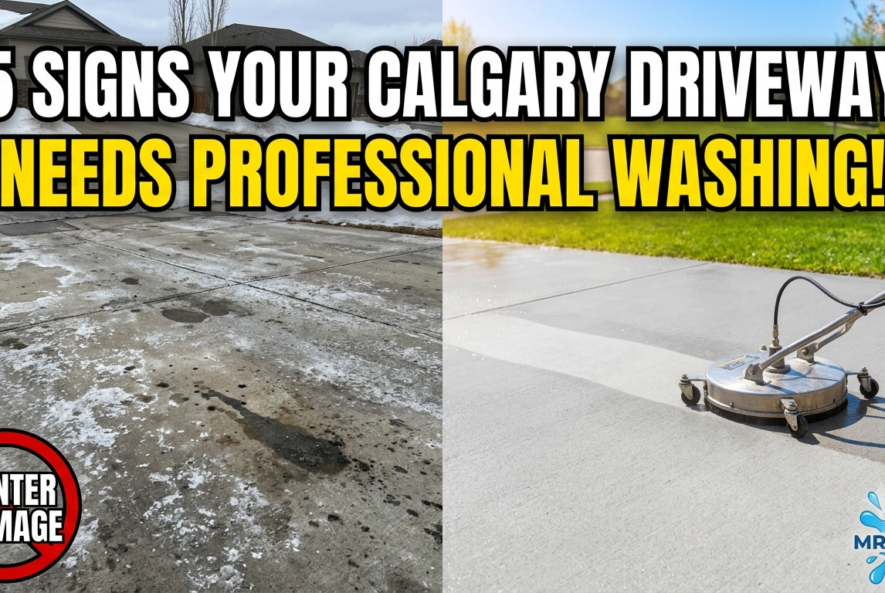
Calgary winters are notoriously brutal on concrete, asphalt, and paving stones. Between sub-zero temperatures, constant freeze-thaw cycles, heavy snowfall, and heavy applications of road salt and gravel, your driveway endures continuous mechanical and chemical stress from November through April. By the time the snow melts, what remains is a dull, stained, and salt-encrusted surface that significantly drags down your home’s overall curb appeal.
While many homeowners assume a quick spray with a standard garden hose or an inexpensive electric washer will clean things up, surface washing barely scratches the surface. Deeply embedded vehicle fluids, ground-in road gravel, and chemical de-icers require professional intervention.
Below, we dive into the 5 indisputable signs your Calgary driveway is due for a professional pressure wash this spring—and why taking action early protects your property investment for years to come.
1. White Salt Crust and Winter De-Icer Stains
During Calgary’s winter months, municipal road crews and property owners rely heavily on chemical de-icers, road salt, and coarse gravel to maintain traction on icy roads and walkways. Every time you drive your car, truck, or SUV home, your tires carry these corrosive compounds directly onto your concrete driveway.
The Hidden Chemical Threat to Concrete
Concrete is not a solid, impermeable slab; it is a porous, sponge-like material full of micro-capillaries and air pockets. When slush infused with sodium chloride, calcium chloride, or magnesium chloride melts onto your driveway, the liquid solution sinks deep into these micro-pores.
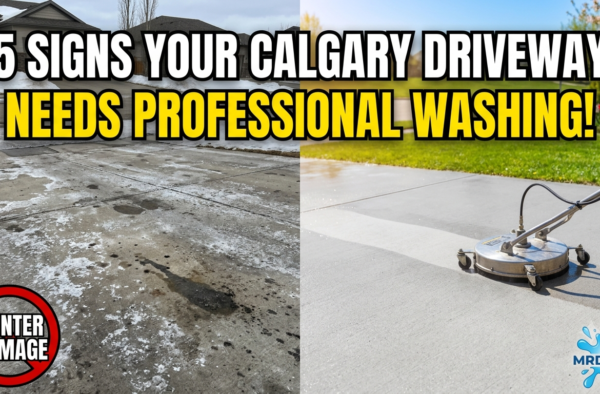
As spring temperatures warm up and the water evaporates, the salt crystallizes within the concrete’s internal structure. This leaves behind distinct, powdery white stains and crusty rings across your parking area.
The Long-Term Structural Risk: Spalling & Scale Damage
The real danger isn’t just cosmetic. Trapped salt draws moisture into the concrete through a process known as hygroscopic action. When Calgary experiences rapid spring temperature swings—dropping below freezing overnight and rising above zero during the day—that trapped moisture freezes and expands by roughly 9%.
This internal expansion generates massive hydraulic pressure inside the concrete. Over time, it causes:
- Surface Spalling: The smooth top layer of the concrete flakes off, exposing the rough aggregate underneath.
- Scaling and Pitting: Small, crater-like holes form across high-traffic tire tracks.
- Structural Cracking: Micro-cracks widen into deep fractures that allow water to reach structural rebar.
How Professional Washing Solves It
A standard garden hose lacks the pressure and flow volume needed to flush out deep-seated chemical salts. Professional pressure washing for Calgary driveways utilizes high-flow commercial equipment combined with specialized chemical neutralizing detergents. This process breaks the bond of embedded salts and flushes them completely out of the concrete matrix before summer heat permanently bakes them in.
2. Dark, Stubborn Oil, Grease, and Fluid Stains
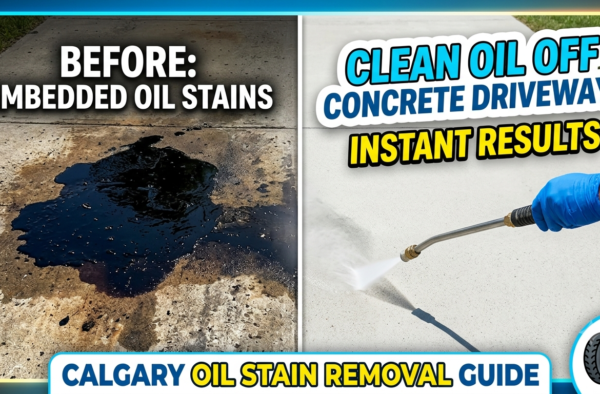
Whether you park a daily commuter vehicle, a heavy-duty work truck, or an older classic car on your driveway, fluid leaks are practically inevitable. Motor oil, transmission fluid, power steering fluid, and radiator coolant quickly turn a clean concrete driveway into an unsightly eyesore.
Why Oil Stains Are So Hard to Remove
Because concrete is highly porous and hydro-phobic to water alone, oil leaks do not stay on the surface. They migrate downward through gravity and capillary action, saturating the concrete multiple millimeters below the surface. Cold water applied with a standard pressure washer nozzle will simply bounce off the oil, spreading a slick sheen across a wider area without actually lifting the stain.
Safety & Environmental Hazards
Aside from destroying your home’s curb appeal, vehicle fluid stains present two major problems:
- Slip-and-Fall Hazards: Fluid residues create slick spots that become exceptionally dangerous when wet from spring rain.
- Substrate Degradation: Petroleum products can slowly soften and degrade synthetic binders, asphalt, and joint sealants.
The Professional Extraction Process
Lifting oil from porous concrete requires chemistry and thermal energy. Professional exterior cleaning technicians utilize industrial-grade alkaline degreasers that break down complex hydrocarbon chains into water-soluble compounds. Combined with hot-water pressure units or specialized flat-surface cleaners, these targeted treatments pull deep-set oil up to the surface where it can be safely washed away.
3. Dark Streaks, Baked-In Tire Rubber, and Traffic Grime
Have you noticed that your driveway looks significantly darker, blotchier, and more worn than it did a few years ago? Over time, daily vehicle movement bakes rubber particles, asphalt tar, exhaust soot, and fine Alberta road dust into the micro-texture of your driveway.
The Science of “Tire Friction Bonding”
When you turn your power steering or brake on your driveway, friction generates heat. This heat softens the rubber on your tires, transferring hot rubber particles directly into the tiny grooves and pores of the concrete. Over a few seasons, these microscopic layers build up, creating stubborn black tire tracks that resist standard cleaning attempts.
The Problem with “Wand-Washing” DIY Attempts
Homeowners who attempt to clean these dark streaks using a consumer-grade pressure washer and a spray wand often end up making matters worse. Using a narrow spray nozzle close to the concrete creates “zebra striping” or “wand marks”—permanent lines caused by uneven pressure distribution that can accidentally etch and damage the surface layer of your concrete.
The Rotary Surface Cleaning Solution
Professional pressure washing teams use commercial rotary surface cleaners. These dual-nozzle spinning sprayers hover at a fixed, precise distance above the concrete, distributing high-pressure water evenly at up to 4,000 PSI. This delivers a streak-free, uniform deep clean that lifts years of baked-on tire rubber and roadway dirt in a single pass.
4. Slippery Moss, Mildew, and Green Algae Growth
Calgary’s spring melt leaves behind plenty of moisture, particularly on north-facing driveways, shaded areas beneath trees, or sections sheltered by garage overhangs and privacy fences. Where moisture lingers, organic life thrives.
Identifying Organic Contaminants
- Green Algae: Appears as bright or dark green patches in damp, shaded zones.
- Black Mildew & Mold: Shows up as splotchy, dark gray or pitch-black spots often mistaken for dirt.
- Moss: Forms dense, spongy green mats along concrete expansion joints and hairline cracks.
The Danger of Ignoring Organic Growth
Organic spores do not simply sit on top of concrete—they root into the microscopic pores. Moss, in particular, acts like a sponge, holding water against the surface long after rain or snow has stopped. During spring freeze-thaw cycles, this trapped moisture accelerates surface cracking.
Furthermore, algae and mildew form a slick, micro-thin biofilm when wet. Walking across a mossy or algae-covered driveway during a spring rainstorm poses a serious slip-and-fall risk for your family, visitors, and delivery drivers.
Deep Eradication vs. Temporary Surface Rinsing
Simply blasting moss off with high-pressure water leaves tiny spores behind in the pores, allowing the growth to return within weeks. Professional pressure washing incorporates eco-friendly soft-wash detergents that penetrate deep into the concrete to kill organic growth down to the root, keeping your driveway clean and slip-free all season long.
5. You Plan to Seal Your Concrete This Season
Applying a high-quality concrete sealer is one of the single best investments a Calgary homeowner can make. A breathable penetrating sealer (such as a Silane-Siloxane blend) shields concrete against moisture penetration, salt corrosion, spalling, and UV damage.
However, sealer performance depends entirely on surface preparation.
Why Surface Prep Makes or Breaks Concrete Sealing
Sealers work by chemically bonding with the silica inside clean, open concrete pores. If you apply a sealer over a driveway that contains hidden dirt, oil residue, or road salt:
- The Sealer Will Fail to Bond: The protective coat will bubble, peel, or flake off within a few months.
- Trapped Stains Become Permanent: Sealing over oil spots or salt rings locks them beneath a clear coat, making future removal nearly impossible without heavy chemical stripping.
- Cloudy White Haze Forms: Trapped moisture beneath an improperly prepped sealer causes a reaction known as “blistering,” turning your driveway an unsightly milky white color.
The Golden Rule of Concrete Maintenance
Before applying any sealer, your driveway must undergo a comprehensive, deep-cleansing pressure wash to open the pores, lift contaminants, and ensure optimal adhesion. Skipping this critical prep step wastes time and money on sealant products that won’t hold up.
The Benefits of Choosing Professional Pressure Washing Over DIY
While renting a pressure washer from a local hardware store might seem like a fun weekend DIY project, cleaning concrete effectively requires the right balance of pressure, temperature, flow rate, and chemistry.
| Feature / Benefit | DIY Rental Washer | Professional MrDecor Service |
| Water Pressure (PSI) | 1,500 – 2,500 PSI (Low) | Up to 4,000 PSI (Commercial Grade) |
| Water Flow (GPM) | 1.2 – 2.0 GPM (Low rinsing power) | 4.0 – 8.0 GPM (Flushes deep debris) |
| Hot Water Capabilities | Cold water only (Incapable of melting oil) | Commercial Hot-Water Units (Melts grease) |
| Cleaning Consistency | Streaky “wand marks” common | Uniform, streak-free rotary surface cleaning |
| Chemical Application | Standard store-bought detergents | Industrial-grade, eco-friendly degreasers |
| Risk of Surface Damage | High (Risk of etching concrete) | Zero (Controlled pressure & expert technique) |
Protect Your Investment with MrDecor Pressure Washing
Your driveway makes up a huge portion of your property’s front profile. Leaving it covered in winter salt, oil stains, and road grime damages your home’s value and shortens the lifespan of your concrete.
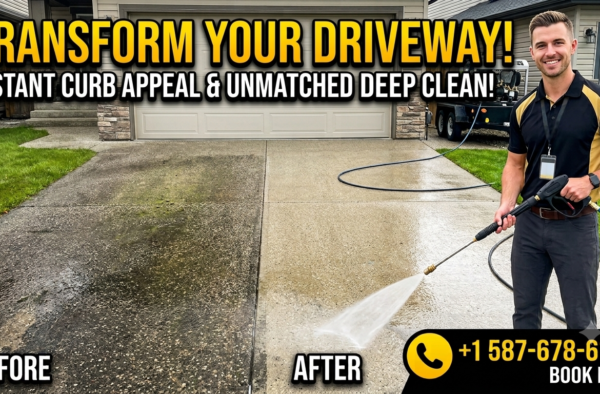
At MrDecor, we specialize in professional, heavy-duty driveway pressure washing and concrete cleaning in Calgary, AB. Our team uses top-tier commercial hot-water pressure equipment, surface cleaners, and safe cleaning solutions to restore your driveway’s original look without damaging your concrete or surrounding lawn.
Ready to Restore Your Driveway’s Curb Appeal?
Don’t let winter damage ruin your home’s exterior this spring. Contact Calgary’s surface cleaning experts today for a free, no-obligation quote!
- 📞 Call Us Today: +1 587-678-6173
- 📧 Email: mrdecor000@gmail.com
- 🌐 Visit Online: mrdecor.ca